Source Hydraulic Concrete Trailer Pump for Building Projects
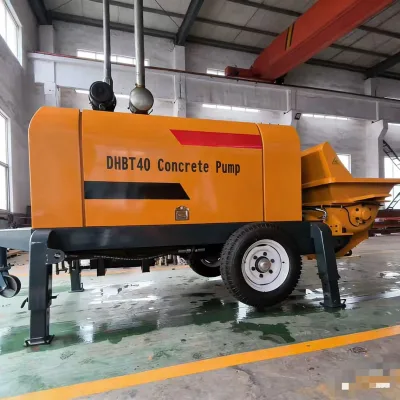
Find a hydraulic concrete trailer pump from 30 verified listings. Compare models with wet shotcrete capabilities, diesel power, and varying productivity rates up to 60m³/h. Evaluate specifications like conveying distance and aggregate size to match your construction project needs.
Key considerations
Products List


$18000.00 - $35000.00
Moq: 1




Comprehensive Sourcing Guide
Hydraulic Concrete Trailer Pump Sourcing Guide
Buyers must first distinguish between wet shotcrete units and stationary concrete pumps, as the supplied data reveals distinct operational profiles for each. The observed listings include models with hydraulic machining processes and varying productivity rates ranging from 25 to 60 cubic meters per hour. This variance directly impacts project scheduling, requiring procurement teams to align machine output with specific pour rates and site logistics before finalizing a purchase order.
The physical configuration of the equipment also dictates suitability for different job sites, with some units featuring cylinder types and others designed as stationary systems. Buyers should verify the maximum conveying distances, which span from 10 meters vertically to over 1,500 meters horizontally depending on the specific model configuration. Understanding these mechanical limits ensures the selected pump can reach the required pour points without necessitating costly auxiliary equipment or pipeline extensions.
Product Scope and Observed Listing Signals
Market listings indicate a wide price spectrum, with observed values ranging from 761 to 80,000 USD, reflecting differences in engine power, structural complexity, and included features. The diesel engine power varies significantly, with specific models listed at 56 kilowatts, while others may possess different power ratings that influence fuel consumption and overall operating costs. Procurement teams must scrutinize these financial signals to ensure the budget aligns with the actual performance capabilities required for the intended construction project.
Product condition is consistently listed as new across the observed inventory, yet the packaging methods vary between containerized shipments and nude packing with anti-rain protection. These logistical details are critical for buyers planning international transport, as the choice between container and nude packing affects freight costs and on-site unloading procedures. Additionally, the presence of unique selling points like high operating efficiency suggests that some models offer superior performance metrics that justify a higher initial investment over standard units.
Technical Specifications to Verify
The core mechanical specifications require careful validation, particularly regarding the feeding height and hopper capacity, which are listed at 1370mm and 700 liters respectively for certain models. These dimensions determine the ease of material loading and the compatibility with various concrete mixer trucks, ensuring a seamless workflow during high-volume pouring operations. Buyers should confirm that the aggregate size limit, noted as less than 40mm for specific units, matches the mix design specifications of their project to prevent blockages or mechanical strain.
Vertical and horizontal conveying distances are critical performance indicators that vary widely among the available models, with some capable of reaching 200 meters vertically and 1,500 meters horizontally. The vibrating amplitude, observed at 2.0mm and 2.6mm in different listings, influences the stability and flow consistency of the concrete during transit. Verifying these exact parameters against the site's topographical challenges is essential to guarantee that the pump can deliver the required volume without interruption or equipment failure.
Compliance and Safety Documentation
Certification status is a primary verification point, with CE and ISO9001 marks appearing frequently in the product attributes for both blue and yellow colored units. These certifications indicate adherence to specific safety and quality management standards, which are mandatory for many international construction projects and regulatory environments. Buyers must request valid certificates for the specific serial number of the unit being purchased to ensure that the compliance claims are current and applicable to the machinery in question.
Machinery test reports are provided for several models, offering documented evidence of performance under controlled conditions before shipment. This documentation serves as a crucial risk mitigation tool, allowing buyers to verify that the hydraulic systems and engine power meet the advertised specifications prior to delivery. Relying on these reports rather than marketing claims ensures that the equipment will perform reliably in the field, reducing the likelihood of unexpected downtime or safety incidents during operation.
Cost Drivers and Commercial Terms
The total cost of ownership is heavily influenced by the power type and engine specifications, with diesel engines being the standard configuration for these mobile units. The 56kW engine power observed in specific models represents a baseline for fuel efficiency and torque output, but buyers should compare this against the productivity rates of 25 to 60 cubic meters per hour to calculate the cost per cubic meter of concrete pumped. This analysis helps determine whether a higher-priced, more efficient model offers better long-term value than a lower-cost alternative with reduced output.
Commercial terms such as the warranty of core components, typically listed as one year, define the scope of post-purchase support and financial protection. Buyers should also investigate the availability of after-sales services, including video technical support, which can significantly reduce maintenance costs and downtime during critical project phases. Understanding the full scope of the warranty and support package is essential for budgeting, as it directly impacts the financial risk associated with equipment failure and repair needs.
Supplier Qualification and Quality Control
Origin and manufacturing location are key factors in assessing supplier reliability, with products originating from China and specifically Hunan province being prominent in the listings. This regional concentration suggests a specialized supply chain for concrete pumping machinery, but buyers must verify the specific factory credentials and production capacity to ensure consistent quality. The presence of customization options indicates that suppliers are willing to adapt standard models to meet specific client requirements, which can be a valuable asset for unique project needs.
Quality control is further evidenced by the provision of machinery test reports and adherence to international standards like ISO9001. Buyers should request detailed inspection protocols and verify that the weight and dimensions, such as the 5000kg weight and 4000x2150x2200mm dimensions for certain models, match the physical reality of the unit. Ensuring that the supplier can provide these verifiable data points is crucial for maintaining project timelines and avoiding delays caused by equipment that does not meet the specified technical requirements.
Long-Term Procurement Checks
Sustainability and operational longevity are determined by the availability of spare parts and the robustness of the core components covered under warranty. The one-year warranty on core components provides a baseline for reliability, but buyers should inquire about the long-term availability of hydraulic parts and engine components to ensure the machine remains operational for years. This foresight is particularly important for projects with extended timelines or for companies that plan to utilize the equipment across multiple job sites over several years.
The marketing type, listed as an ordinary product, suggests that these units are standard industrial equipment rather than specialized niche machinery. This classification implies that maintenance procedures and operator training are well-established, facilitating easier integration into existing workflows. However, buyers must still verify the specific application suitability, such as building projects and general construction, to ensure the pump's design aligns with the specific demands of their future work, preventing premature wear or underutilization of the asset.
FAQs
What is the productivity of the hydraulic concrete trailer pump?
The hydraulic concrete trailer pump offers a productivity of 25 cubic meters per hour. This capacity supports steady concrete delivery for various construction projects. Higher output models are also available to meet larger project demands efficiently.
Can the hydraulic concrete trailer pump be customized?
Yes, customization is available for the hydraulic concrete trailer pump. Buyers can request specific modifications to suit unique project requirements. This flexibility ensures the equipment aligns precisely with operational needs and site conditions.
What certifications does the hydraulic concrete trailer pump have?
The hydraulic concrete trailer pump holds CE and ISO9001 certifications. These standards confirm compliance with international quality and safety regulations. Buyers can rely on these credentials for regulatory approval and operational safety in global markets.
What is the maximum horizontal conveying distance?
The maximum horizontal conveying distance reaches up to 120 meters for standard models. Some advanced configurations extend this range significantly. This capability allows efficient concrete placement across wide construction sites without frequent repositioning.
What is the power type of the hydraulic concrete trailer pump?
The hydraulic concrete trailer pump operates on a diesel power type. It features a diesel engine power of 56kw. This robust power source ensures reliable performance in remote or off-grid construction locations without external electricity.
What is the warranty for core components?
The warranty for core components is one year. This coverage protects major parts against manufacturing defects. Buyers receive video technical support for troubleshooting, ensuring minimal downtime and sustained operational efficiency during the warranty period.